


TELUS Health · Digital health
On-demand consultation
Redesigning the consultation journey so patients arrived prepared for care—reducing clinician administration while improving completion of essential pre-consultation tasks.
Patients weren't adequately prepared before entering the waiting room, creating downstream problems for both patients and clinicians.
Scope
Prototyping
Product design
Usability testing
Role
Timeline
9 months
Platform
iOS
Android
Responsive web
Timeline
9 months
Context
Patients were reaching clinicians unprepared
The existing journey treated preparation as a series of steps patients encountered on their way to the waiting room.
That created a misleading sense of progress. Patients could continue without understanding what was incomplete or why it mattered, while clinicians inherited the missing work once the consultation started.
This wasn't simply a form-completion problem.
The key question
Where should preparation end and waiting begin?
Understanding the journey
Looking across patient behaviour and clinician feedback revealed that preparation and waiting had become blurred together. Patients could reach the waiting room with unfinished tasks, while clinicians inherited whatever remained incomplete.

The turning point: preparation needed its own stage.
Before: Assessment → waiting room with tasks
After
Assessment → Preparation → Review → Enter consultation
Rather than improving each form independently, I introduced a clear breakpoint between getting ready for care and waiting for care.
Designing within technical and clinical constraints
Designing the solution required navigating several technical and regulatory constraints.
Ensure all patient data and flows comply with regulation & clinical requirements.
Create solutions that work with legacy backend limitations
The entire flow had to exist inside a modal interface, with no page refreshes or redirects and limited ability to save progress
Designing the solution
To ensure patients arrived prepared for consultations, I designed a structured pre-consultation intake experience.
The goal was to guide patients through required preparation steps before entering the waiting room and reduce clinician workload.
Focus: One task at a time reduced cognitive load during preparation.
Visibility: A preparation summary made completed and outstanding requirements clear.
Flexibility: Valid alternatives allowed patients to progress without hiding incomplete requirements.
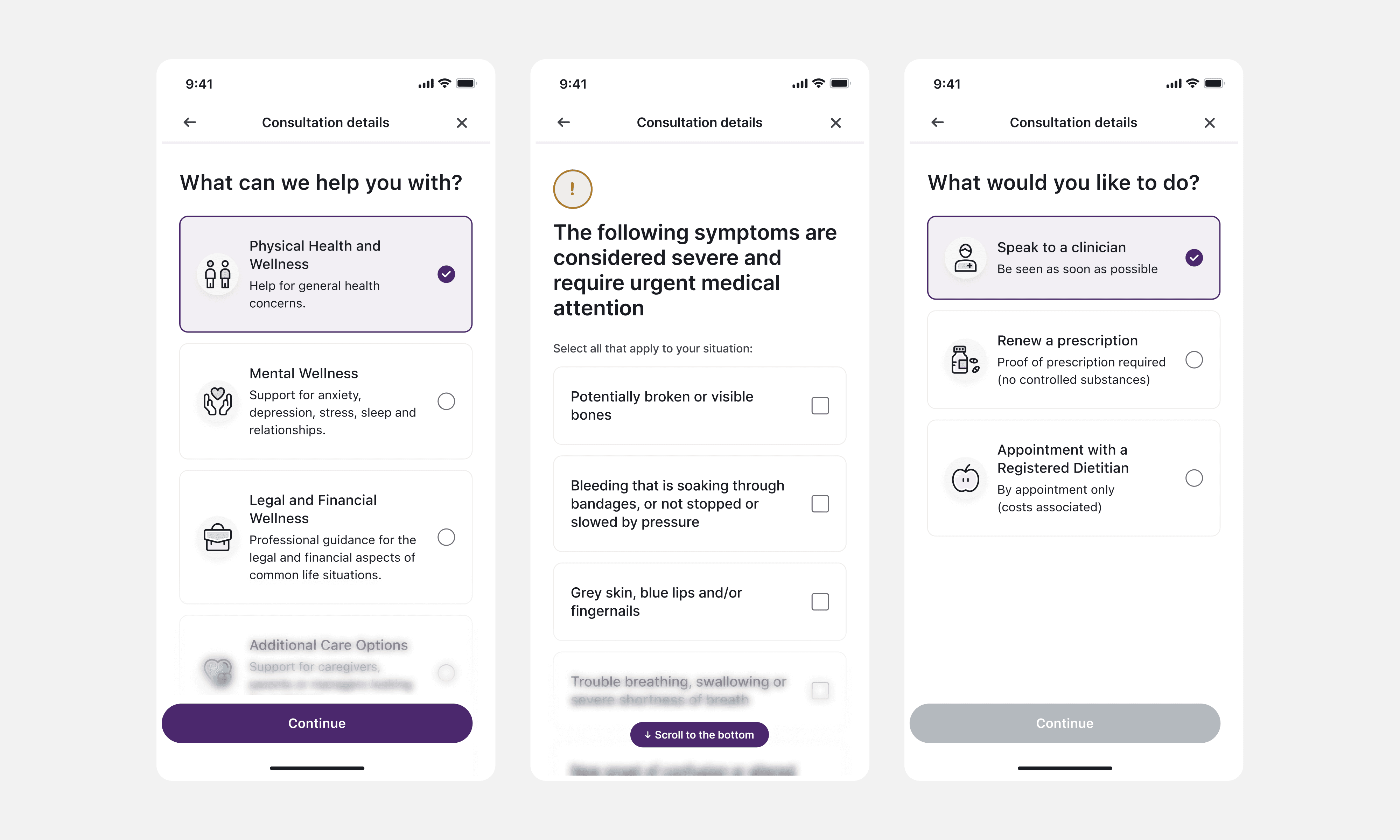
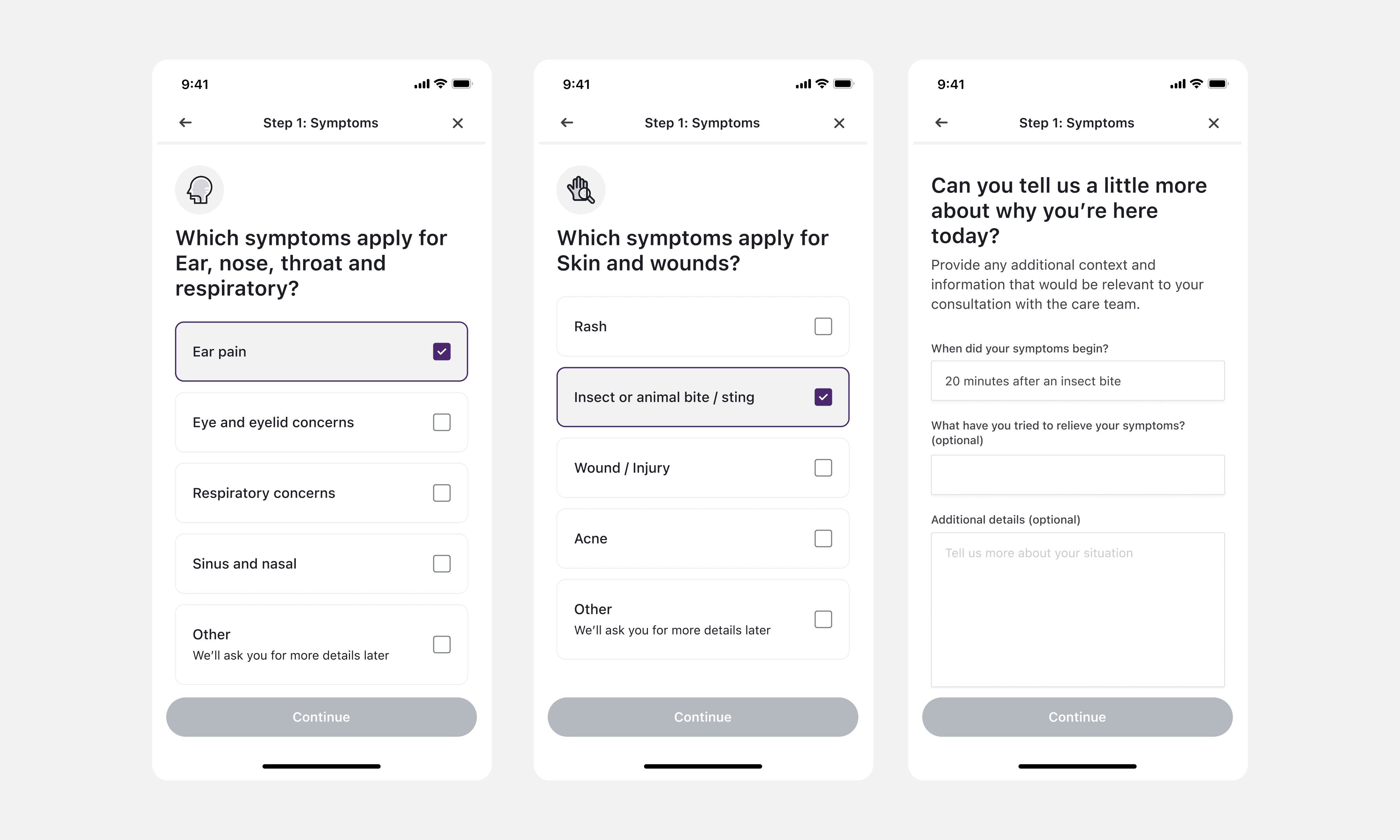
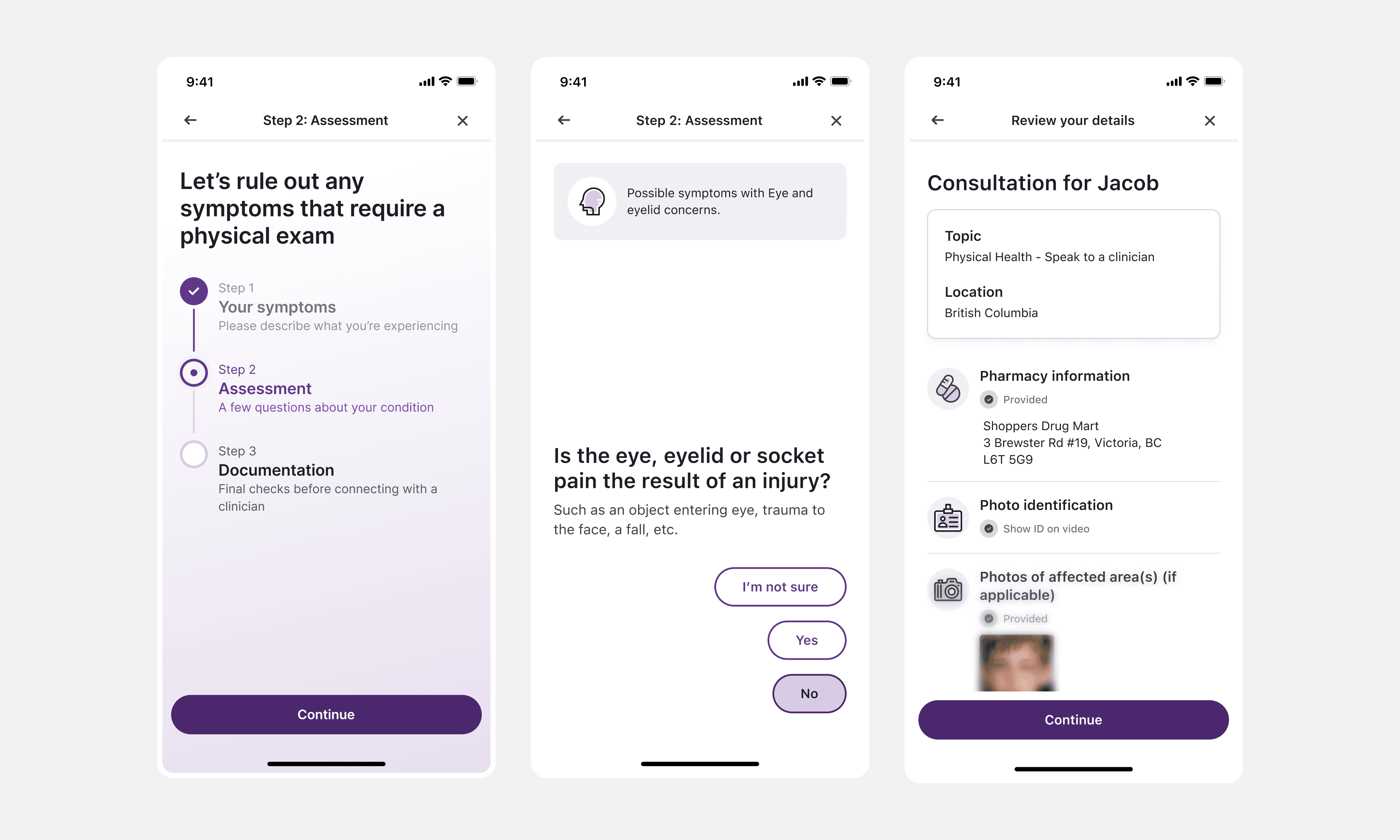
Testing and iteration
I tested the redesigned journey with six external participants, focusing on whether people understood preparation as a distinct stage and could identify what remained incomplete.
Testing refined hierarchy, status communication and how we explained optional versus required tasks before engineering implementation.
Impact
Better preparation upstream reduced work downstream
The redesigned consultation flow improved both patient preparation and clinician efficiency.
Key outcomes included:
Reduced administrative workload for clinicians
Higher rates of patient information completion before consultations
Improved consultation completion rates
Clinicians were particularly enthusiastic about the new flow, as it allowed them to spend more time providing care rather than collecting administrative details.
Reflection
What worked
Treating preparation as a journey rather than individual forms
Working with clinical constraints rather than designing around them
Testing comprehension of the overall journey, not only individual screens
What I'd improve
Establish task-level abandonment metrics earlier
Identify which missing tasks created the greatest clinician burden
Measure the relationship between preparation and consultation outcomes
Let’s work together.
I’m open to Senior Product Designer roles where complex problems, strong craft and measurable outcomes matter.
hey@razrashid.com
" height="32px" id="hrO0YMoaZ" width="32px"/><path d="M 3.6 16 L 0.2 16 L 0.2 5.3 L 3.6 5.3 Z M 1.9 3.8 C 0.8 3.8 0 3 0 1.9 C 0 0.8 0.9 0 1.9 0 C 3 0 3.8 0.8 3.8 1.9 C 3.8 3 3 3.8 1.9 3.8 Z M 16 16 L 12.6 16 L 12.6 10.2 C 12.6 8.5 11.9 8 10.9 8 C 9.9 8 8.9 8.8 8.9 10.3 L 8.9 16 L 5.5 16 L 5.5 5.3 L 8.7 5.3 L 8.7 6.8 C 9 6.1 10.2 5 11.9 5 C 13.8 5 15.8 6.1 15.8 9.4 L 15.8 16 Z" fill="rgb(255, 255, 255)" height="16.000000190734863px" id="Ocq6OAmI9" transform="translate(8 8)" width="16px"/></svg>)
" height="32px" id="JVzKgZkM5" width="32px"/><path d="M 0 2.667 C 0 1.194 1.194 0 2.667 0 C 4.139 0 5.333 1.194 5.333 2.667 C 5.333 4.139 4.139 5.333 2.667 5.333 C 1.194 5.333 0 4.139 0 2.667 Z" fill="rgb(26, 188, 254)" height="5.333399999999999px" id="ydcjNquk_" transform="translate(15.983 13.333)" width="5.333300000000001px"/><path d="M 0 2.667 C 0 1.194 1.194 0 2.667 0 L 5.333 0 L 5.333 2.667 C 5.333 4.139 4.139 5.333 2.667 5.333 C 1.194 5.333 0 4.139 0 2.667 Z" fill="rgb(10, 207, 131)" height="5.333300000000001px" id="NPUpvGMxn" transform="translate(10.65 18.667)" width="5.333399999999999px"/><path d="M 0 0 L 0 5.333 L 2.667 5.333 C 4.139 5.333 5.333 4.139 5.333 2.667 C 5.333 1.194 4.139 0 2.667 0 Z" fill="rgb(255, 114, 98)" height="5.3332999999999995px" id="jGljsiE4Z" transform="translate(15.983 8)" width="5.333300000000001px"/><path d="M 0 2.667 C 0 4.139 1.194 5.333 2.667 5.333 L 5.333 5.333 L 5.333 0 L 2.667 0 C 1.194 0 0 1.194 0 2.667 Z" fill="rgb(242, 78, 30)" height="5.3332999999999995px" id="JUFtWyYKp" transform="translate(10.65 8)" width="5.333399999999999px"/><path d="M 0 2.667 C 0 4.139 1.194 5.333 2.667 5.333 L 5.333 5.333 L 5.333 0 L 2.667 0 C 1.194 0 0 1.194 0 2.667 Z" fill="rgb(162, 89, 255)" height="5.333399999999999px" id="StHT4lRlg" transform="translate(10.65 13.333)" width="5.333399999999999px"/></svg>)
©
Selected works / Raz